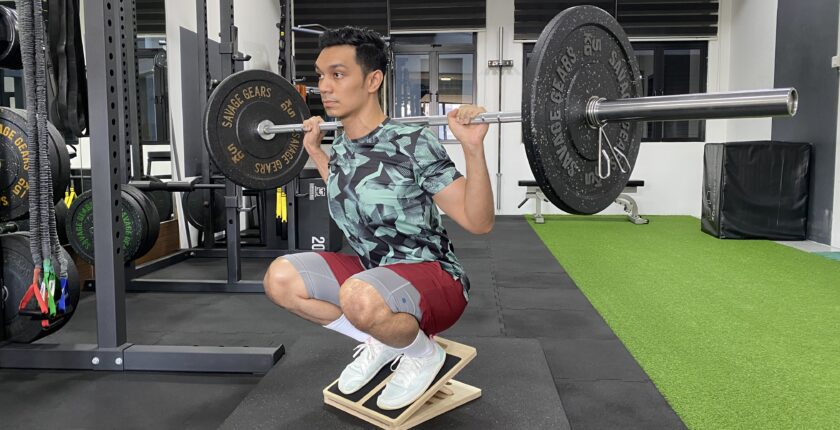
“Slant board squats have been gaining attention and for good reason.”
By elevating your heels, they allow greater knee flexion, reduce ankle mobility restrictions, and shift the load more directly onto the quads. Whether you’re recovering from a knee injury or simply looking to build lower body strength with better squat mechanics, slant board squats are a smart addition to your training routine.
To maximise benefits and minimise risk, it’s important to approach slant board squats with a clear progression.
Here’s a breakdown of how to safely and effectively build your strength and control over time.
1. Assisted Slant Board Squat
This is the best starting point for beginners, those with limited mobility, or anyone returning from injury. Hold onto a stable support while performing the movement. The goal is to build confidence, maintain proper alignment, and learn how to control the eccentric (lowering) phase of the squat.
2. Bodyweight Slant Board Squat
Once you’re confident with the assisted version, try performing bodyweight slant board squats. Focus on controlling the descent, maintaining an upright torso, and driving evenly through the midfoot. This version builds the foundation for strength and control through the full range of motion.
3. Dumbbell Goblet Slant Board Squat
Adding load through a goblet hold increases demand on your quads, core, and upper back. This variation still encourages good posture while reinforcing bracing and tension throughout the body. Keep the dumbbell close to your chest and move with intent and control.
4. Front Squat on Slant Board
This barbell variation increases loading capacity while still maintaining a quad-dominant squat pattern. The elevated heels support deeper knee flexion and an upright spine—ideal for athletes and lifters looking to improve front squat mechanics or transfer strength to Olympic lifts.
5. Back Squat on Slant Board
This advanced progression allows the most load, but also requires the most control. It’s easy to let the knees shoot forward too far or lose core engagement. Be sure you’ve mastered the earlier progressions before moving here. Control the tempo, brace your core, and prioritize quality reps over heavy loads.
Key Training Tips
Progress slowly: Only move to the next stage when you have full control and stability in the previous one.
Tempo matters: Don’t rush the eccentric phase—control builds strength.
Warm-up properly: Prep your ankles, hips, and knees before jumping into deep squat work.
Listen to your body: These movements can feel intense. Respect your range of motion and avoid pain.
Slant board squats are more than just a fitness trend—they’re a powerful tool for building stronger legs, improving mobility, and protecting your knees. Whether you’re a beginner or an experienced lifter, following a structured progression ensures you’re moving safely and effectively.
Train smart, stay consistent, and earn that strength the right way.